
How Maddock Combining Section enhances the fragmentation of unmelted particles
Release time:2026-09-20
The Maddock structure allows the melting to separate, filtrate and recoup through a controlled gap, under a stronger cut. From the working principles, selection conditions, common risk and validation methods, the Maddock amalgamation section shows how to increase the dispersible dispersive effects of the unmelted particles, helping to stabilize the retrofitting plant and reduce the full life cost of the screw drum.
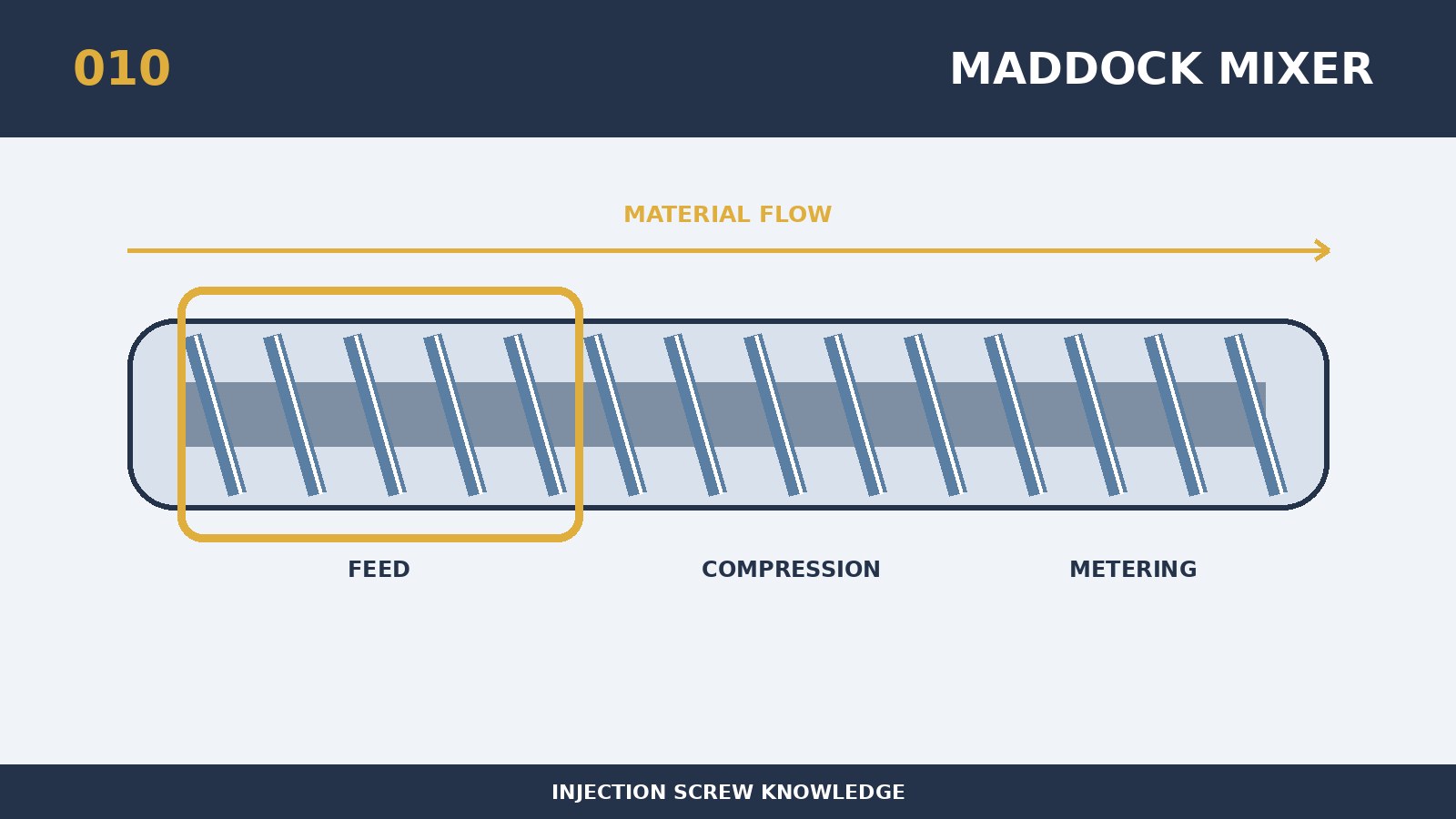
The way in which the Maddock band increases the dispersible dispersive effects of unmelted particles is directly related to the plastic quality and equipment load, and therefore the same set of evaluation criteria should be used by design, procurement, switch and maintenance personnel. At its core is the Maddock structure, which allows the molten to separate, filter-melt and recoup through a controlled gap, under stronger cutting. The entry slots, barriers and export tanks are co-established to create pressure differentials, and unmelted particles are further melted through the gap. Structural parameters are interconnected and any local modifications are evaluated in the complete path of transport, melting, mixing, metrology and cleaning. A usable manufacturing map is not only a common name, but also a signal, a measuring transect, a surface state and a receiving and inspection belt to accompany the drum. Nominal specifications are therefore only the starting point, and the final conclusions must serve the actual resin, product and volume rhythm.
When customizing around "how Maddock blends increase the dispersible particles' dispersive effects", first collects the size of the equipment model, the original screw and the material drum, the driving power, the resin number and the filling system, the single mass, the cycle and the existing defects. The specific selection principle for this topic is that it is suitable for situations that require high gels, unmelted points or chromosomal dispersion, provided that the material cut-off sensitivity is checked. If the device can export a curve, the original record of screw position, turn speed, twist, back pressure and time should be kept, so as to avoid only being assessed by the operator. The technical agreement should include quantifiable provisions for size benchmarks, key communications, material status and acceptance methods so that new, old and subsequent restorations can be compared under the same criteria.
The most important defence against the failure of the subject is that too small a gap can lead to high temperatures and high twirl, and that the preservation of an increased gap after wear and tear will gradually diminish the refining effect. The screening begins with a determination of whether the anomaly occurs suddenly or increases slowly with production; the former is mostly related to carcasses, alien or process changes, while the latter is more like wear and tear. For on-site processing, only one main variable is changed each time and the measurement time, twist, melting temperature, mat, injection pressure and product weight are aligned to the same pattern. If production is to be sustained by excessive temperature, turn speed or back pressure, the use of parameters to mask structures, wear or collage should be discontinued.
This replicable approach can be used to validate how “Madddock blends enhance the dispersive effects of unmelted particles” by creating performance baselines for old and new segments using molten filters, film perforation, twisting and melting temperature data. For multi-plant reproduction projects, uniform test, sample size and determination rules should be used in order to avoid subjective variations among different groups. Inquiries to suppliers should also be accompanied by information on resins and fillings, risk of flame retardation or corrosion, total weight of products and fluids, photographs of available screws and equipment curves. The programme is considered to have a stable engineering value when the detection data, the good product rate, the timing of the switch and the unit cost of the eligible goods are improved.