
Full halogen-free alloy-filled piping screws: corrosive resistance to grinding
Release time:2025-07-15
Full halogen-free alloy alloying plume? Should be assessed together with grinding material, surface treatment, distillation and fibre retention rates, and not only with hardness; the final option would be to test and model with actual material, back pressure and cycle. This paper combines information on star-friend screw stations to organize selection, process and validation elements.
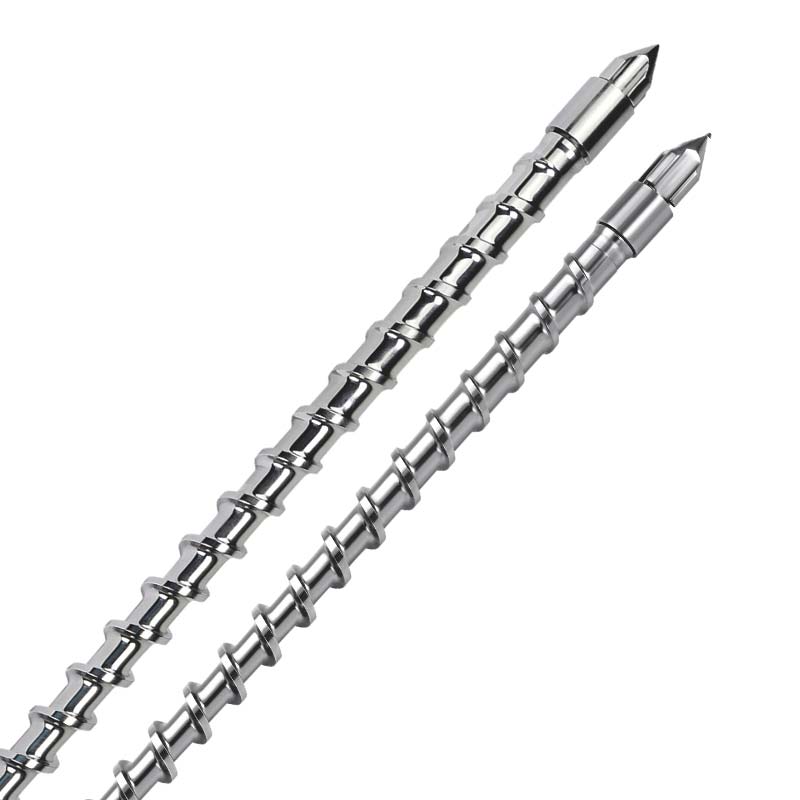
The core conclusion of a non-halogenated alloy alloy plume.
Grain-resistant materials, surface treatment, mixing and fibre retention rates should be assessed together, and not only hardness should be seen; the final programme needs to be validated with actual material, back pressure and cycles.
Full halogen-free alloy-filled piping screw:
Precision in the form of a pioneer in the field of corrosive and grinding resistance
In the field of plastics, common screws are often frequently replaced by fast wear and corrosion when faced with “high-proffic” materials, such as halogen-free flame retardants and plastics containing highly corrosive additives. The emergence of a fully halogenated alloy alloy refilled snail is like the installation of a “gold bell mask” for a precise retrofit. It has a high-resilience foundation as a skeleton, combined with the United States Division's too-thin alloy-painting technology, which forms a full protection layer, making a breakthrough in corrosive resistance and grinding performance, and providing a reliable guarantee of long-term fine-tuning.
Basement and Melting Layer: Perfect integration of dual advantage
The “hard power” of a halogen-free alloy-filled plastic screw derives from a careful selection of the base. Its core uses alloy steel, which is both resilient and hard, and has a modulated hardness of up to HRC30-35 and a shock resilience of over 80J/cm2, which not only ensures the rigid support of the whole of the screw, but also has the ability to resist fatigue in response to injection pressure fluctuations. This building block, which is like a solid “boneshelve”, provides a stable adjunct to the surface bread cover and avoids the cracking and tearing of the cover due to insufficient base strength.
The “protected armor” of the screw surface is derived from the advanced application technology of the United States Department of State. Through high-temperature mistized nickel-based alloy powder and Ni+WC (carbonized tungsten) composite powders, the hypersonic flames (HVOF) are evenly attached to the screw working area, forming a full-melted alloy layer of 1-2 mm thick. It is not a simple “painting”, but a combination of metallurgical and parent materials. A combination of up to 210 bar (approximately 21 MPa) equal to 210 kg of pull per square centimetre, far exceeding the adjunct capacity of the ordinary plating layer (5-10 MPa) to ensure non-skinning and non-defeating during the long-term high pressure plating process.
Performance bright spots: corrosive and wear-resistant double breakthroughs
The super-widestight range brings a grinding up.
The hardness of the non-halogenated fully melted alloy layer can be accurately adjusted between HR58-65, depending on the work situation: when processing 20 per cent of the platinum-containing non-halogenated PP material, the HRC60 smelting layer is selected at 0.002 mm, which is one eighth of the normal nitrogen steel screws; when processing non-halogenated PA66, which contains ceramic powder, the high hard version of HRC65 is selected, with a further 30 per cent increase in grindability. An electronic plant uses it to produce non-halogenated flame-retarded PC/ABS casings, and the service life of the screws has been extended from 3 months to 18 months, reducing the time-cost of stoppages to replace the screws by more than 40 hours per year.
Full corrosive and chemical stability.
A complex of nickel-based alloys and WCs gives excellent corrosive resistance to the smelting coating, impregnating for 24 hours in a 10% sulfate solution at a corrosion rate of 0.001 mm/year, well below 0.05 mm/year of 304 stainless steel. For brominated flame retardants (e.g. phosphorous, nitrogen additives) commonly found in non-halogenated materials, as well as for acid degradation products produced during the process, the smelting coats can form a stable passivation membrane like a “chemical protective suit” for the screws. A test by an electric company showed that after six months of using the screw to process PBT material containing 15 per cent of phosphorus-based flame retardants, the surface of the pole remained smooth, with no signs of corrosiveness, such as plume points, gutters, etc., and that the normal screws would have visible corrosive pits under the same conditions.
A long-term guarantee for a sophisticated retrofit.
The core value of a non-halogenated alloy alloy plume is to provide a stable performance support for long-term fine retrofitting. The complete package design ensures that the work area of the screw (from the material to the measurement segment) is free of bare parent material and avoids changes in the volume of the snails due to local corrosion or wear. In combination with fine grinding, the cortex of the screw is contained within ±0.01 mm and the surface is photolytic to Ra0.4 or lower, which stabilizes the resistance to the movement of the molten body and can be up to ±0.3% of the injection mass.
This stability is particularly critical in the production of non-halogenated medical devices (e.g., liquid dispensers components). A medical plant had experienced size fluctuations due to wear and tear of a normal screw, with a product badness rate of up to 5 per cent. With the conversion of the full halogen-free alloy spiral, the bad rate has been reduced to 0.3 per cent, reducing the annual waste loss by more than $200,000. In the area of automobile electronics, the processing of non-halogenated PPO connectors, which contain bovine fibre, ensures that after half a million continuous mould cycles, the product size differential remains within ±0.02 mm and meets the requirements for precision assembly.
Compared to similar products abroad, the screws of this paragraph are no less important in performance indicators: The introduction of the Stellite spray technology ensures consistency in the quality of the fusion vertebrae, with 210 bar combinations of the same intensity as the high-end international brands, at a cost of only 70-80 per cent of imported products. As environmental requirements become more stringent and the use of non-halogenated materials becomes more widespread, the non-halogenated fully melted alloy piping screws, with their characteristics of “super-resistible corrosive, ultra-resistible, long-lived” have become ideal options for addressing the challenges of the processing of non-halogenated materials in the field of precision emulation, providing solid hardware safeguards for high-quality production of non-halogenated products.
Data to be recorded before implementation
- Material integrity number, filling ratio, flame-retarding system, refill ratio and dry condition.
- Note plastics brand, model, screw diameter, voltage, back pressure, turn speed and current screw structure.
- Indicators of product size, wall thickness, appearance or strength, and current adverse phenomena and frequency of occurrence.
- Continuous production cycle, refuelling frequency, machine clean-up method, wear and tear record and planned useful life.
How to validate the adjustment results
It is recommended that the current process baseline be established, followed by a single-variant test model. Each round records the measurement of time, melting temperature, product weight, formation cycle and bad rate, avoiding multiple parameters being changed at the same time to determine the cause. The parameters in the text are used to illustrate design thinking and should not replace material supplier data and on-site safety protocols.
What kind of support is a star-friend screw?
Starmate Mechanical Equipment Co. Ltd. in East China City (the Starfleet Spiral) can provide materials and situational assessments, screw structural recommendations, base and surface treatment options, non-spectrum customization and trial modelling issues around the full halogen-free alloy plume. The submission of information on raw materials, equipment and products could lead to more targeted programmes.
Ask for customized screws immediately, or check firstNote plastic screw productwithNote Plastic SolutionsI don't know.