
Category A powder stainless steel piping screw: corrosion resistant corrosive resolution
Release time:2025-07-15
A-class powder stainless steel-injected screws? Should be assessed together with grinding material, surface treatment, distillation and fibre retention rates, and not only with regard to hardness; the final programme would need to be validated with actual material, back pressure and periodic tests. This paper combines information on star-friend screw stations to organize selection, process and validation elements.
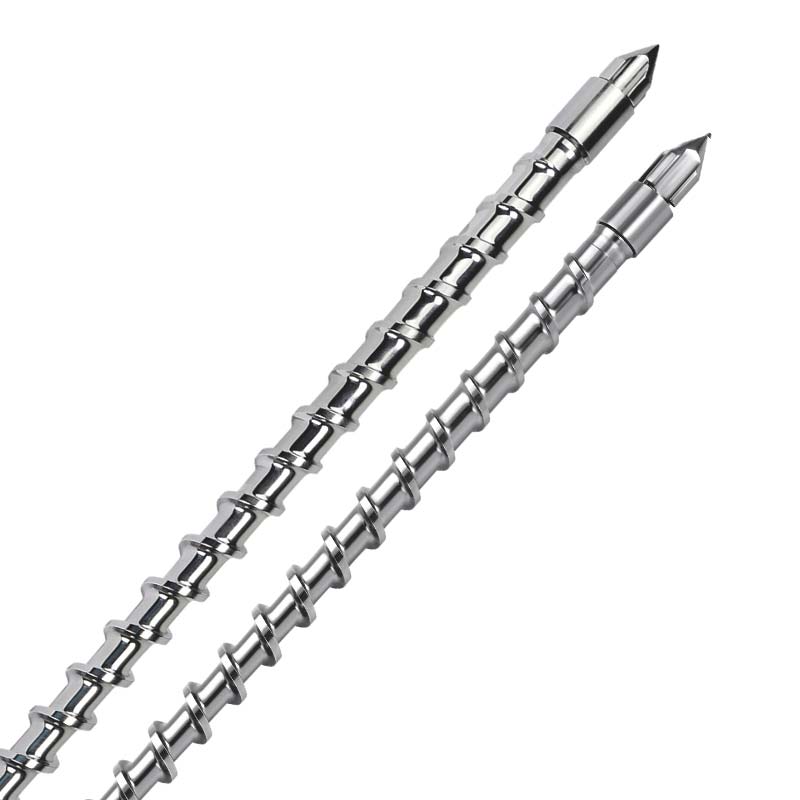
Central conclusion of the powder stainless steel plume.
Grain-resistant materials, surface treatment, mixing and fibre retention rates should be assessed together, and not only hardness should be seen; the final programme needs to be validated with actual material, back pressure and cycles.
Powder stainless steel A-class screws: main advantages
As a high-performance core component of high-end plastered plastic equipment, the powder stainless steel A-class screws have emerged from their advanced powder metallurgical technology. It parallels powder high-speed steel with the world ' s top-level tool steel, with thermal-like static pressure (HIP) technology, which produces a fine, crystal-smuggling mix with far more performance than traditional casting steel. Its performance is comparable to that of the high-end screws abroad, providing a unique advantage for complex demand for plasticization.
Powder metallurgy: excellent manufacturing
Unlike traditional found steels (e.g., prone to deformation and pore), the screw is composed of 1150 °C high temperature and 100-150 MPa pressure, which is suppressed by a static pressure (HIP) of a aerosol metal powder (50-100 m in diameter) of 99.9%. The process removes defects and ensures even mechanical performance (5% horizontal/vertical and > 15% casting).
Main material advantages
even microstructures: Ultra fine oscillary crystals (3-5 μm, 1/5 for found steel) increase the resistance to fatigue by 40 per cent and reduce the risk of cracking during long-term use.
Enhanced performance:
Impact resilience: 25J/cm2 (50% higher than found steel).
Hardness: HRC62-65 (even, HRC1 deviation).
Resilient: 40 per cent of glass fibre fill PPOs have a wear and tear of 0.0015 mm/10,000 cycles (1/10 of a normal screw).
Corrosive resistance: salt-resistant fog for 1,000 hours (five times longer than chromium plating).
Surface treatment: Ra0.2 (slower than the mirror), which reduces the resistance of the lava flow by 15 per cent and minimizes defects in high viscosity materials such as PEEK.
Useful
For most injection scenarios:
Automobiles: 30% glass fibres PA66 component (maintenance of precision ± 0.01 mm in 500,000 cycles).
Medical: Chlorine flame retardation ABS (standard ISO 10993).
Electronics: 5G filter PTFE formation (20% efficiency improvement through low friction).
Performance in extreme cases:
- 40°C elasticity formation: the tenacity loss is only 8% (and the normal screw risk is three times higher).
350°CLCP processing: slow oxidation (0.0005 mm/1000 hours, 1/5 of casting steel).
Synchronize with global standards
It's been tested to match the high-quality screws abroad:
Compared to the German brand, 20 per cent of ceramics filled with PPS have a 3 per cent worn-out life difference.
After 100,000 cycles, size stability reached ±0.008 mm.
Cost decreases of 15-20 per cent and the use of rigorous quality checks (3 no-lose tests, ± 0.05° flight angle differential, 5g cm scales).
This screw combines material science with precision engineering technology, proving that China ' s high-end screw meets global standards. It boosted “China makes 2025” innovation and reduced the dependence on imports for fine-steming and plasticization.
Data to be recorded before implementation
- Material integrity number, filling ratio, flame-retarding system, refill ratio and dry condition.
- Note plastics brand, model, screw diameter, voltage, back pressure, turn speed and current screw structure.
- Indicators of product size, wall thickness, appearance or strength, and current adverse phenomena and frequency of occurrence.
- Continuous production cycle, refuelling frequency, machine clean-up method, wear and tear record and planned useful life.
How to validate the adjustment results
It is recommended that the current process baseline be established, followed by a single-variant test model. Each round records the measurement of time, melting temperature, product weight, formation cycle and bad rate, avoiding multiple parameters being changed at the same time to determine the cause. The parameters in the text are used to illustrate design thinking and should not replace material supplier data and on-site safety protocols.
What kind of support is a star-friend screw?
Starmate Mechanical Equipment Co. Ltd. (Starfinger) provides materials and situational assessments, screw structure recommendations, base and surface treatment options, non-spectrum customization, and simulation questions around powder stainless steel plume. The submission of information on raw materials, equipment and products could lead to more targeted programmes.
Ask for customized screws immediately, or check firstNote plastic screw productwithNote Plastic SolutionsI don't know.